

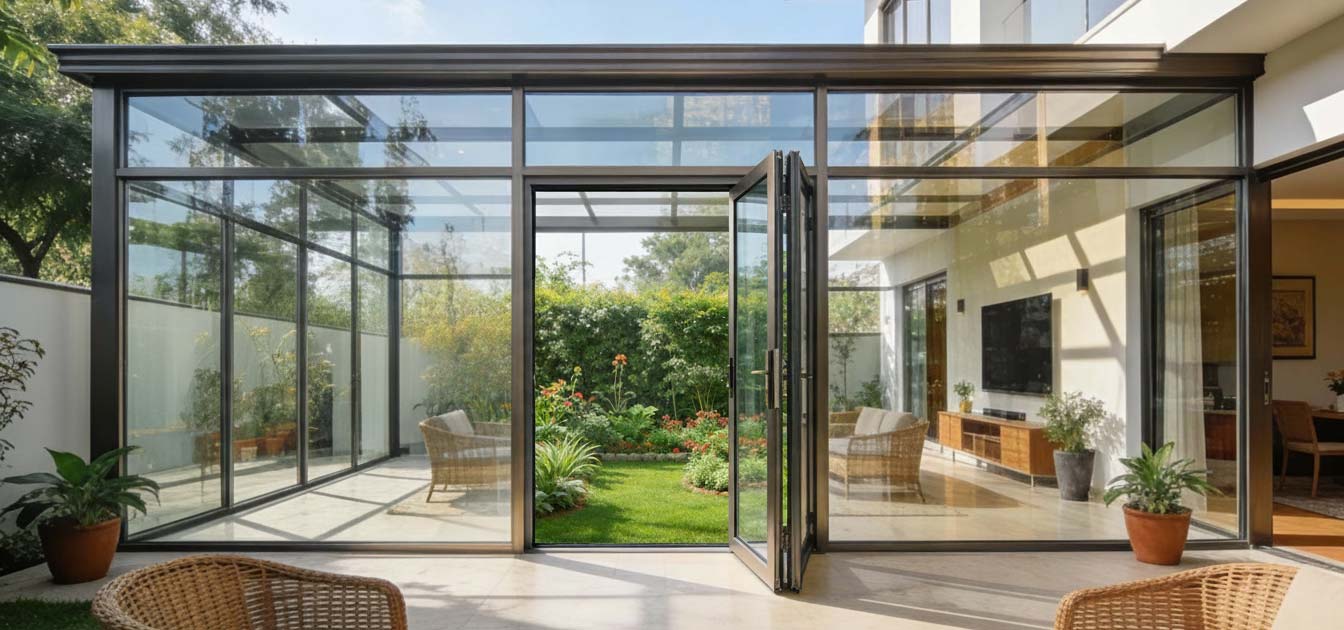
For those who have the possibility of creating a veranda from the ground or closing off an existing balcony, the aluminium and glass veranda is the ideal architectural solution: it enhances space and increases living comfort, without sacrificing functionality and design.
In this article we explore the features and potential of verandas made of glass and aluminium, with a focus on the advantages offered by the latter material in the construction of long-lasting and attractive verandas.
Why and how to build a veranda
Owning a house with a veranda is a dream of many, as this architectural element offers numerous advantages.
Firstly, the advantages are functional: with a veranda, it is possible to use the open spaces of the house (balconies, porches, gardens) all year round, even when it rains or the temperatures are cold. This also means creating additional space, effectively increasing the square spindle of the house and its liveability in everyday life. This also translates into greater living comfort, being able to make use of spaces in contact with the outside, which are very bright and well insulated. All this also increases the value of the house.
There are also aesthetic advantages, especially if the veranda is made in the aluminium-glass combination, for the highest design effect and refinement.
In short: thanks to their versatility and ability to integrate the most practical functionality with the most modern design, the aluminium and glass veranda is the ideal solution for making the most of the home’s external environments, breathing new life into them all year round and reclaiming space that can be used to cultivate one’s passions.
How to make a veranda in aluminium and glass
How can this dream be transformed into reality? We need to analyse the situation carefully and, above all, rely on professionals to make sure we do not run into any mistakes that, emerging only in the advanced stages of the work, could cost us dearly.
- The first thing to do is certainly a preliminary assessment. It is indeed essential to assess the space you have available, taking into account elements such as size, orientation and exposure to the sun’s rays during the day. At this stage, it is also useful to ask why we want a veranda, i.e. what we plan to use it for: relaxation, work, or other.
- At this point (or even at the beginning of the preliminary assessments) it is essential to turn to professionals, such as METRA Building, to carry out a customised design of the glass and aluminium veranda. Among the various elements to be considered in the design are:
- the type of opening of the veranda (the patio door can, for example, be casement or sliding. More on the type of opening in this article);
- the steps to be taken to ensure that the veranda has effective thermic insulation – to ensure a pleasant temperature in all seasons – and soundproofing;
- the presence of any accessories that make the veranda even more comfortable, easy and pleasant to use. Examples include flyscreens or a curtain system or other types of shading systems. Particularly popular as a shading system, especially in modern, designer veranda, is the aluminium sunblades;
- the possible inclusion of the opening/closing and heating/cooling of the veranda (as well as the ventilation system, if any) within the home autmation system. METRA Building aluminium windows and doors, for example, can be integrated into the home automation for maximum functionality in the home.
- Once the tailor-made design phase has been completed, the next step is to submit the project to the competent authorities in order to obtain permits that will allow the veranda to be built in compliance with current regulations. There are also situations in which permits are not required – if the veranda is a structure belonging to the free building industry -, as well as specific rules for those wishing to build a veranda in a condominium. For these issues, please refer to the article on how to build a veranda, under “regulations and authorisations”.
- Finally, the much-desired moment arrives to install the veranda, based on the customised project that was created. In this case too, it is essential to rely on professionals who are experts in the installation of glass and aluminium verandas. In fact, you cannot make any mistakes when installing if you want to guarantee the safety, durability and weathertightness of the veranda.
A special veranda: the removable veranda
Many people want a veranda, but they do not want to:
- bind themselves to a fixed structure, perhaps with overall dimensions, that permanently disrupts the outdoor space of their home;
- have to comply with the current regulations on the construction of verandas, thus having to pay and wait for the relevant permits.
In these cases, the removable veranda is the ideal solution, because it provides a protected but still flexible environment. In fact, removable verandas are structures of a temporary nature, designed to be easily assembled and disassembled. They are therefore very flexible structures that can be removed or dismantled if necessary; they are obviously easy to assemble and dismantle, thus not requiring the intervention of professionals. Moreover, they are generally cheaper than fixed verandas.
Removable verandas can be made from a variety of materials, but, again (and as will be discussed in more detail in this article), the glass-aluminium combination is the ideal one for robust, flexible and functional verandas.
Aluminium and glass: two perfect materials for veranda
The combination of two materials such as aluminium and glass immediately evokes an image of modernity, sophistication and design. Those who choose to install an aluminium and glass veranda choose to give their homes a contemporary and minimalist touch, thanks to the transparency of glass and the clean, essential lines typical of aluminium windows and doors.
The glass and aluminium veranda is therefore ideal for those who do not want to compromise on quality design. But it is not just a question of design, because that would not be enough: it is also a question of combining design with maximum functionality, with the aim of experiencing the veranda with comfort and practicality in everyday life.
The advantages of aluminium for the veranda
Aluminium is undoubtedly one of the most widely used materials for window and door frames and architectural structures such as verandas. This is because its advantages in this field are many, as it is a material with truly unique features that are not easily equalled by other materials commonly used in the field, such as wood or PVC.
From the point of view of veranda construction, the major benefits that aluminium can bring are summarised here.
- resistance to atmospheric agents: aluminium is perfect for structures that are in contact with the outdoors, such as verandas, because it ffers extremely high resistance to the most violent weather conditions. You can therefore enjoy your veranda space every day, even when rain, wind, snow or extremely cold temperatures rage outside. Aluminium withstands these stresses without losing its qualities, it does not corrode and does not discolour even when subjected to strong and prolonged solar radiation. Moreover, this resistance allows aluminium windows and doors to support large glass surfaces without the danger of deformation, which is particularly useful in the construction of verandas. You can learn more about the concept of aluminium resistance in this article.
- lightness and flexibility: one of the most amazing features of aluminium is its ability to be so strong while maintaining substantial lightness and flexibility. This makes it the perfect material for removable veranda, which need to be able to be dismantled and moved frequently and easily; but also, for fixed conservatories that give the room a sense of refinement and essentiality. In its combination of strength and lightness, aluminium allows for very thin and elegant veranda profiles.
- long durability and minimal maintenance: compared to other materials such as PVC, aluminium is able to guarantee a very long lifespan, even several decades, when used in windows and doors. Even more extraordinarily, this occurs with very little – or rather, no – need for ordinary or extraordinary maintenance. Even if subjected to the constant presence of sun, humidity or atmospheric agents, aluminium maintains its qualities and appearance unaltered, without the need to apply specific products or check its condition frequently. Cleaning aluminium is also very easy, as it is a material that does not stain and does not retain dust.
- thermic insulation and soundproofing: when treated with thermal break and combined with top-quality glass, aluminium is the best material to guarantee the highest level of living comfort for the veranda. This means being able to enjoy the veranda at any time of the year, with the certainty of being warm in winter and cool in summer, and sheltered from annoying noise from outside.
- maximum aesthetic customisation: as discussed in the dedicated article, aluminium also surprises with its almost unlimited customisation opportunities in terms of colours and finishing. In fact, aluminium can take on a large number of different colours, as well as opaque, glossy, sandblasted or wood-effect finishes – just to name a few – thanks to a painting or anodising operation, which maintain colours and finishes unchanged over time. Thus, although the aluminium and glass conservatory is particularly suitable for modern houses, it can actually be adapted to any architectural style.
- environmental sustainability: with aluminium, it is possible to make conservatories that are environmentally friendly and as eco-friendly as possible. In fact, aluminium is a sustainable choice as it can be 100% recycled an infinite number of times, without ever losing its qualities. Opting for an aluminium veranda therefore means reducing your environmental impact without sacrificing functionality and design.
The advantages of glass for the veranda
As we have seen, aluminium is capable of supporting large glass surfaces even with thin profiles. When combined with this material, glass allows for verandas that maximise the entry of natural light, offering a pleasant feeling of continuity with the external environment. It is therefore possible to obtain a veranda with thin and essential profiles, with colours and finishes in line with one’s preferences and the architectural style of the case; profiles that support large glass panes that create bright and welcoming spaces.
It will only be necessary to choose the right glass, as you can learn more about in the guide to choosing glass. For example, double glazing helps to insulate the veranda better, reducing heat loss in winter and keeping the temperature cool in summer. Laminated glass or toughened glass also guarantee a high level of security against burglary attempts and accidental impacts.
Finally, one can opt for special glass to meet specific needs; for example, sound-absorbing glass to improve the soundproofing of the veranda, or coated glass to screen out excessive solar radiation.
How to use an aluminium and glass veranda
Especially in urban contexts where every extra square metre can make a difference, building a veranda on balconies, terraces or gardens can really enhance people’s quality of life. Thanks to the features discussed in detail in this article, a glass and aluminium conservatory allows you to do many things with maximum comfort and functionality.
Some examples of how an aluminium veranda can be used:
- study or work area: homes often lack a dedicated study or work space for those who can work from home. The aluminium conservatory can provide this space, especially with its natural light and soundproofing, making it perfect for concentration and productivity. Just add a compact desk, an ergonomic chair and shelves to organise the space well and get the study that was missing.
- outdoor dining room: in cases where the home lacks a real space for lunch or dinner, or if you want to treat yourself to the luxury of eating “with a view”, the aluminium veranda can become a cosy space dedicated to the table, perfect for a romantic dinner or a breakfast to be enjoyed at leisure. Even in smaller verandas, a folding table and folding chairs can be inserted to optimise space. This will allow you to enjoy the external environment even in cold weather.
- relaxation corner: especially in cases where several people live in the house and spaces are always shared, the aluminium and glass veranda can be transformed into a true refuge where one can relax in total serenity. For example, you can recreate a reading area or a small living room, furnishing the veranda with comfortable armchairs, cushions, plants and soft lighting.
- domestic greenhouse: the aluminium and glass conservatory, especially if it is small and placed on a balcony, can fulfil the wishes of those who like to take care of plants and flowers. The glass can generate the right micro-climate for growing small potted vegetables, colourful flowers or aromatic plants in an environment that is always protected from the weather and colder temperatures .
The aluminium veranda can also be equipped with elements that make it even more comfortable, such as automated blinds for quick and practical lighting control, or integrated ventilation systems to ensure optimal air circulation. With a few tricks, the aluminium and glass veranda becomes much more than a bonus space: it is that extra space that gives a soul to the house and makes many small wishes come true.