

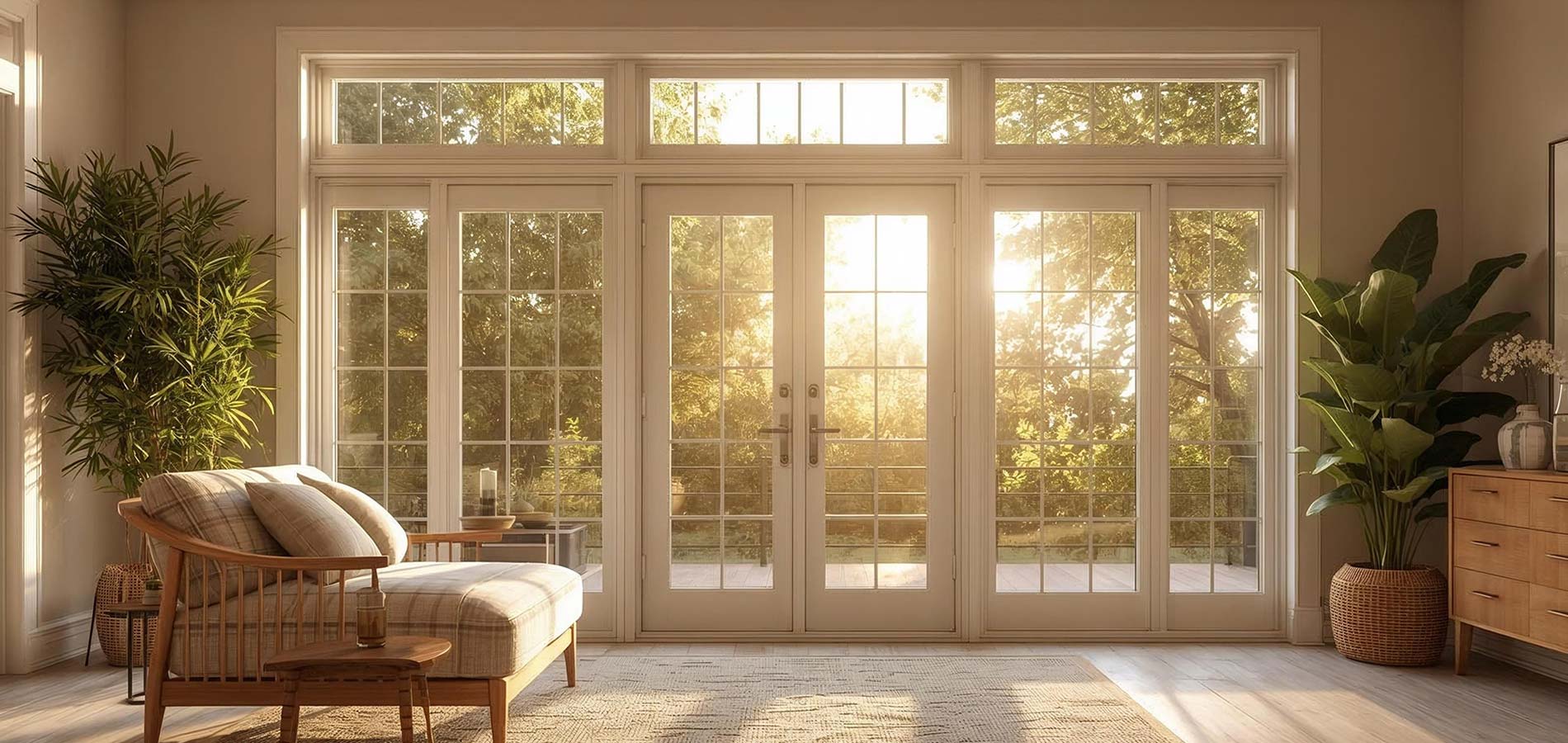
It’s possible: Here’s how to do it
In contemporary interior design, the boundary between classic and modern is no longer clear-cut, but rather a new meeting point. It is possible to mix antique and modern elements, creating a functional home full of personality. But how can you combine two seemingly opposite design styles? This article provides tips on how to achieve the perfect balance, choosing aluminium as the ideal common thread.
Antique, classic, modern: different concepts that can blend harmoniously
Once upon a time, there were very few dominant styles in interior design, and furnishing your home meant referring to a specific type of furniture. Today, we are fortunate to live in an era where mixing styles from the past and present is possible and, at times, even desirable. Combining different styles means furnishing your home according to your tastes and personality, giving it a unique character that sets it apart from all others.
One of the most interesting trends is the one that aims to bring together two different and, in some ways, contrasting worlds: the antique and the modern.
The differences between ‘antique’ and ‘classic’
‘Modern’ is often contrasted with the concepts of ‘antique’ and ‘classic’, which are considered synonymous but are not.
The antique style refers to pieces of furniture (original or reproductions) that recall past eras, usually the 18th, 19th and 20th centuries. You will therefore look for solid wood furniture, 19th-century sideboards, walnut tables, upholstered chairs, brocade fabrics, mirrors with gilded frames and chandeliers. In antique style, every object tells a story that has its roots in the past, often revealing its uniqueness.
The classic style, on the other hand, does not refer so much to specific pieces of furniture as to a question of shapes, proportions and elegance. It is inspired by warm colours, symmetry and rich materials. It certainly evokes the past, but does not necessarily require the presence of antique objects: rather, it is important that each room is furnished according to a taste for harmony and refinement.
The main characteristics of ‘modern’
‘Modern’ is an adjective that can mean everything or nothing, but in interior design, the modern style refers to clean lines and functional design, often with a minimalist feel. Colours are often black and white, passing through the entire grey scale, beige and desaturated tones. Volumes are clean, spaces are open and perfectly lit, even with cold light. The preferred materials are the more technical ones, such as glass, steel and aluminium.
How to mix classic and modern: 5 tips
Although the concepts of antique and classic are distinct, this article offers tips on how to ensure that your home expresses a harmonious combination of two different and contrasting sensations: the r classic feel (which comes in part from the use of antique furniture) and the modern feel.
Start with a neutral and clean base
To bring together very different elements, you need a common base that is as neutral and tidy as possible, so as not to create further contrasts that could be in bad taste.
So go ahead with light-coloured walls, continuous flooring and a consistent colour palette. This creates an ideal setting in which every piece, whether antique or modern, can stand out with personality and balance. For example, a white wall is the perfect backdrop for an old period sideboard. If the window frames are made of matt or satin-finish aluminium, this creates a visual contrast that adds rhythm to the space.
Key architectural elements should be understated and contemporary so that they do not detract from the more striking furnishings, while creating a silent dialogue between different eras. Made of aluminium, METRA Building’s interior doors and windows are well suited to this purpose: clean, essential, with slim profiles and always an expression of discreet refinement.
Bringing together materials from different ‘worlds’
The charm of mixing classic and modern lies mainly in the encounter between different materials: the success of this ‘hybrid style’ depends precisely on textures and material contrasts. Worn wood can thus be combined with satin-finish metals, velvets and smooth surfaces, decorated glass and plastic materials.
Aluminium is one of the materials that lends itself best to this mix: it is a versatile and versatile material that is easy to combine with both classic furniture and ultra-contemporary elements. Elegant and highly customisable, it brings the past and present together thanks to the possibility of using it in different finishes, such as natural wood, bronze or graphite black.
Choose a guiding element that creates a sense of coherence
To avoid the risk of the classic-modern dualism of the furnishings appearing inconsistent and ‘an eyesore’, it is essential that each room has a clear visual theme. This could be a dominant colour, a recurring geometric shape, the same material used in different ways… The aim is to create consistency, without falling into monotony.
For example, you can focus on shapes: if you choose period furniture with curved lines, you can continue this trend with contemporary details with soft, enveloping shapes, thus avoiding overly rigid contrasts. Or it could be a colour, found for example in the frame of a painting, a cushion or a door handle. In this regard, it is interesting to note that METRA Building windows and interior doors can be reproduced in a wide variety of colours, so you can always find the shade that best suits the style of your home.
Use light as your main style ally
When mixing antique and modern elements, natural light becomes an invaluable ally. Rooms that are too dark or have too much direct, focused light can overwhelm classic furniture and make modern pieces appear cold.
It is therefore important to maximise the amount of natural light entering the home. There are several ways to do this, but when designing or replacing windows, it is important to opt for frames with the thinnest possible profiles in order to maximise the glass surface area. This can only be achieved with aluminium frames, a material with remarkable mechanical strength, capable of supporting large panes of glass with slim profiles.
Artificial lighting must also be carefully planned, perhaps combining classic wall lights and minimalist pendant lamps. The important thing is to achieve a balance between light sources and choose the right light temperature: for rooms with classic and modern furnishings, warm light is best.
Maintaining the right balance in every detail
When deciding to mix elements belonging to styles as different as antique or classic and modern, you need to have the courage to leave space for emptiness; this in turn becomes a bridge between the different elements, allowing them to ‘breathe’ and enhancing their uniqueness. A room that is extremely cluttered with furniture, accessories and furnishings is never elegant or liveable, and this is even more true when different styles are mixed.
It is therefore important to avoid clutter: it is better to choose a few good pieces and position them in a harmonious and orderly manner. This also serves to give the right value to particularly unique and characterful pieces of furniture. For example, if you have chosen an antique table as the focal point of your dining room, it is best to balance it with modern chairs that are not overly eye-catching.
Some practical tips for mixing classic and modern in every room of the house
Entrance hall
Classic homes had a separate entrance hall where guests could take off their coats and ‘acclimatise’ before being shown into the living room.
In modern homes, however, there is a tendency to enter directly into an open-plan living area. To mix the old and the new, therefore, you could consider a compromise during the design phase, such as an entrance hall that is only partially separated from the living room, perhaps by a thin glass partition or a double-sided bookcase. But even before the entrance hall, front door: there is the it is advisable to choose one in aluminium, such as those offered by METRA Building, to ensure maximum security and effectiveness. When decorated with wood-effect panels or glass inserts, it creates a solid yet refined visual impact that goes well with classic panelling or a decorated wall.
To furnish the entrance hall in a classic and modern mix, you can combine a baroque mirror or a vintage console table with modern lighting fixtures, such as spotlights or minimalist wall lights; or a retro bench with a designer coat rack. Finally, it is interesting to play with contrasts between materials: lime-washed walls, metal hooks, vintage rugs, plastic console tables
Living room
In general, it is interesting to play with proportions in the living room, combining large antique furniture with modern furnishings with slim, almost ethereal lines. The lighting should be moderately warm and soft to bring out the contrast between the various textures. In the living room more than anywhere else, slim aluminium window frames are essential to maximise the glass surface area.
Among the style ideas, you could combine a modern sofa with clean lines, perhaps in materials such as smooth velvet or bouclé in light tones, with an antique dark wood display cabinet or a vintage trunk to use as a coffee table. Alternatively, you could combine a modern modular sofa in light fabric with a vintage sideboard with wood decorations. A 1950s-style armchair, on the other hand, can look great next to a glass coffee table with metal details. If you have a fireplace, the ideal solution is to go for a classic style, enhancing it with modern, discreet wall lights in matt black metal. On the walls, the antique-modern mix can be achieved by hanging modern graphic posters in gold frames reminiscent of antique paintings.
Kitchen
In the most practical room of the house, the combination of antique and modern can be expressed with rustic, warm furnishings paired with high-tech, highly functional appliances and accessories. For example, exposed steel appliances can be paired with vintage sideboards or country chic pantries.
There are many other ideas for combining antique and modern in the kitchen. Classic or rustic elements such as an antique solid wood dining table, reclaimed iron chairs or copper, brass and ceramic accessories can be beautifully combined with modern matt lacquered wall units, natural stone or marble worktops, transparent chairs with a futuristic look and industrial-style lamps. On a structural level, it is interesting to combine retro-style decorative tiles with modern microcement floors or aluminium window frames with extra-glossy finishes.
Bedroom
The bedroom should always be a space that promotes relaxation, rest and well-being. These objectives can be achieved either through a classic style, perhaps with romantic and slightly frilly accents, or through a modern style, characterised by simplicity and minimalism.
Some ideas for combinations:
- a modern bed with a padded headboard in fabric or light leather with antique or retro bedside tables, 19th-century armchairs and antique mirrors with gold frames;
- dark wood bedside tables inspired by the early 20th century with minimalist lamps with slim lines;
- vintage lamps with a Nordic-style2 bed, with white and light wood as the main colours;
- modern curtains made from lightweight materials such as linen with classic patterned rugs.
Bathroom
Just like in the kitchen, decorative elements can be combined with more functional ones in the bathroom. For a practical home and easy-to-manage, you can choose modern bathroom fixtures and a sink, perhaps wall-mounted with simple, clean lines, to be combined with more classic furnishings.
Classic and antique elements include antique mirrors with ornate frames, old chests that can be repurposed as bathroom furniture, satin brass taps with soft shapes and Art Nouveau-style decorative tiles. Modern elements with lots of character, such as a glass shower enclosure with ultra-thin profiles or a freestanding bathtub, can be combined with stone decorations and more romantic details.
Study or home office
The home study is perhaps the room where you can really indulge yourself in mixing classic and modern furnishings. The way the study was considered in past centuries is very different from how it is considered now, so you can play around with very different pieces of furniture and accessories – without going overboard and falling into bad taste. If you don’t have a real study but still want to create a home office space in your home, you can use partition walls, such as those by METRA Building in aluminium or aluminium and glass. This solution does not require any building work and can effectively delimit workspaces without weighing down the environment.
You can combine a modern desk with a vintage upholstered chair covered in fabrics and satin with 19th-century motifs; or, conversely, choose a modern office chair in sober tones and pair it with a beautiful walnut desk, perhaps with integrated leather inserts. The contemporary modular bookcase can be decorated with antique books and vintage lamps. An old typewriter can be placed on a modern shelf as a timeless decorative object. Next to modern metal organisers, you can place vintage objects such as a small pendulum clock, a globe or a sepia-toned map.
Why choose aluminium windows and doors for a home that blends classic and modern styles
When furnishing a home with the aim of bringing together the old and the new, the past and the present, it is essential to choose elements that unite rather than divide. In this sense, materials play a very important role; aluminium is one of the few materials that, while remaining true to itself, can adapt naturally to both classic and modern contexts.
Windows, interior doors, entrance doors, shading systems: these are all structural elements which, when made of aluminium, guarantee an ideal combination of functionality and aesthetics. Functionality translates into a wide range of advantages, as aluminium:
- is highly resistant to weathering and atmospheric agents;
- does not corrode, does not alter over time, does not deform and is very difficult to break, even in the event of attempted break-ins;
- guarantees high thermal insulation thanks to the presence of a thermal break, thus preventing heat loss and ensuring significant energy savings in the long term;
- also provides excellent sound insulation, acting as a barrier to outside noise and thus optimising living comfort;
- it is extremely easy to clean and requires no maintenance to ensure long life.
Considering all these advantages in terms of efficiency, choosing an aluminium window (or door) also means creating consistency in a mix of contrasting styles, and this is possible thanks to the high degree of customisation of the elements. In fact, aluminium can be finished in a wide variety of colours and finishes, so that doors and windows can be perfectly matched to the style and décor chosen for your home. Colours and finishes are applied through oxidation or painting processes, so there is no danger of them fading or altering over time.
In the case of a mix of antique and modern styles, aluminium doors and window can be finished to look like wood (or even aluminium-wood windows and doors can be chosen (to evoke the warm and welcoming atmosphere of classic style. Alternatively, contrasting colours and sandblasted, anodised or metallic finishes can be chosen to give rooms a more modern touch. The METRA Building range also includes sliding interior doors that disappear into the wall, minimalist frames and flush doors that enhance older, characterful pieces without interfering with their aesthetics.